
Low & unpredictable income
Farmers work hard but still operate without consistent cash flow or clear growth pathways.
Kahawa na Pesa Initiative helps smallholder farmers move from survival farming to structured wealth through coffee-anchored, diversified farm economies.
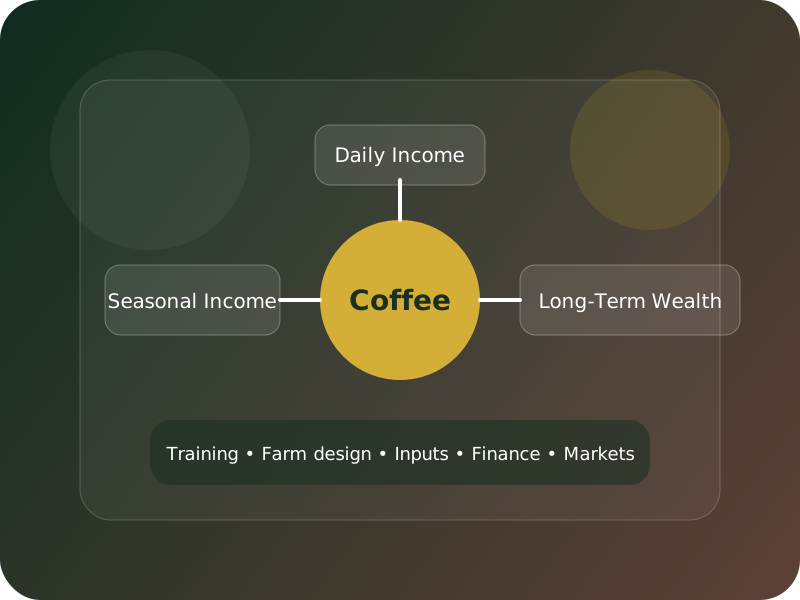
Low and unpredictable income, climate vulnerability, and weak market access keep productive farms from becoming profitable enterprises.
Farmers work hard but still operate without consistent cash flow or clear growth pathways.

Single-income farms absorb weather shocks directly, which weakens household resilience.

Without structured aggregation and buyer relationships, production rarely turns into wealth.
Kahawa na Pesa combines diversified enterprises, practical training, input planning, and market linkage into one operating system for rural livelihoods.
Design every acre for liquidity, resilience, and long-term value.
Field coaching focused on income systems, not theory.
Buyer readiness improves confidence and consistency.
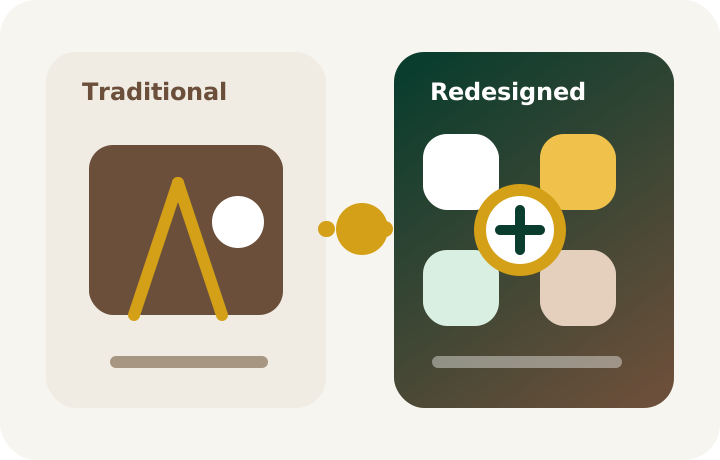
The initiative integrates training, design, finance readiness, and market access into a practical farmer journey.

Capture baseline data and identify your income goals.

Hands-on coaching in climate-smart and regenerative agronomy.

Match crops and enterprises to land size, seasonality, and markets.

Plan input needs, financing pathways, and working capital readiness.

Improve quality, aggregation, and buyer confidence.

Track growth across daily, seasonal, and long-term revenue streams.
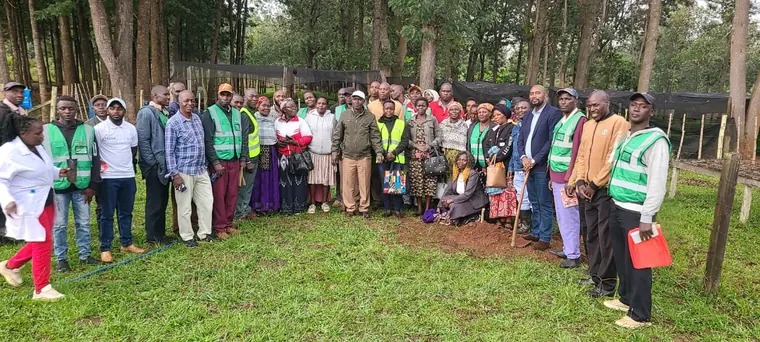
A quick visual window into farmer training, field execution, and the kinds of agribusiness systems being built.

Hands-on field sessions focused on practical farm redesign.

Close farmer support helps convert plans into active farm systems.

Coffee sits inside a diversified income ecosystem, not in isolation.

Aggregation, quality, and buyer confidence are part of the operating model.
Short video stories help partners and farmers understand how training, design, and market linkage work together.
Did you know that 80% of the world's food-insecure population are actually smallholder farmers? Dr. Yona Sakaja is changing that narrative in Kenya through the Kahawa na Pesa Initiative. Watch to see how we are transitioning farmers from subsistence maize crops to high-value coffee production.
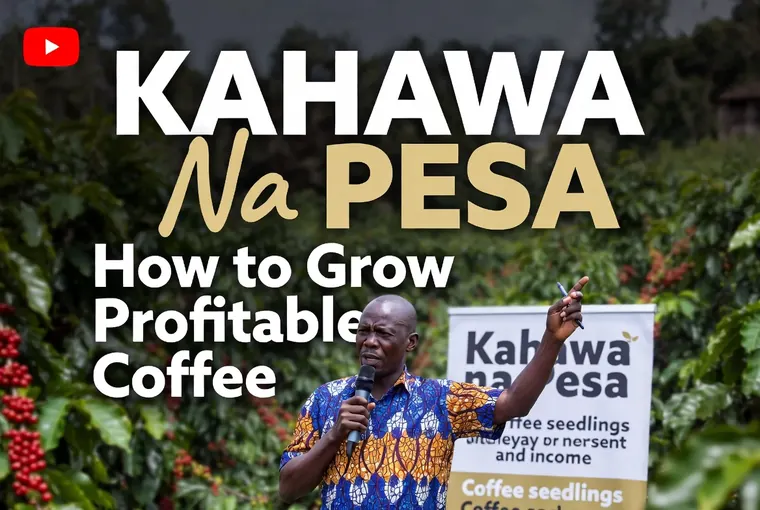
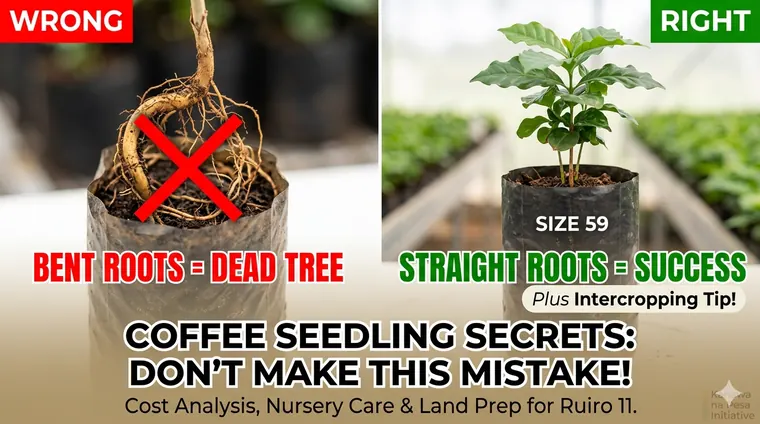
Success in coffee farming starts long before the first harvest. Are you struggling with seedling survival or poor root development? In this deep dive, we break down the technical complexities of coffee seedling production and the critical importance of nursery management to ensure your investment pays off.
"Coffee is the crop that brings dignity." In this moving testimony, Carol Kapchanga from Kinyoro Ward shares how the Kahawa na Pesa initiative is transforming lives in Suboti Sub-County by empowering small-scale farmers to transition from subsistence maize farming to profitable coffee production.
Human proof matters. The initiative pairs operational discipline with visible household outcomes.
In Trans Nzoia, Naliaka moved from a maize-heavy survival system into a coffee-led farm model supported by vegetables, poultry, and tighter business …
Chepkorir's farm in Kitale did not suffer from a lack of activity; it suffered from poor sequencing of income, weak market discipline, …
In Mt. Elgon, Joseph's farm already had valuable crops, but weak husbandry and unstructured selling meant much of that value was being …
Wambui's farm near Nakuru was heavily dependent on seasonal maize with little year-round income. After farm redesign introduced coffee as a long-term …
Partners and farmers need clarity, not slogans. The platform is built to communicate measurable results.
Farm households in the income ecosystem pipeline.
Average growth after shifting into diversified systems.
Land reoriented toward profitable farm economies.
Participation across youth and women-led households.
Testimonials capture quick reactions, confidence shifts, and visible proof of trust in the model.
Farmer · Trans Nzoia
“The training made farming feel like a business again. We now plan for income, not just harvests.”
Farmer · Kitale
“The system helped us see how coffee, beans, and vegetables can support each other across the year.”
Implementation partner · Kenya
“The model communicates clearly because it connects training, finance, and markets in one story.”
Estimate how land size and enterprise choice can shape daily liquidity, seasonal cash, and annual wealth potential.
Open SimulatorFor farmers, buyers, funders, and development partners building practical agribusiness systems in Kenya.